
Conversion from Sole Proprietorship to Private Limited Company: Benefits, Process, and Key Considerations
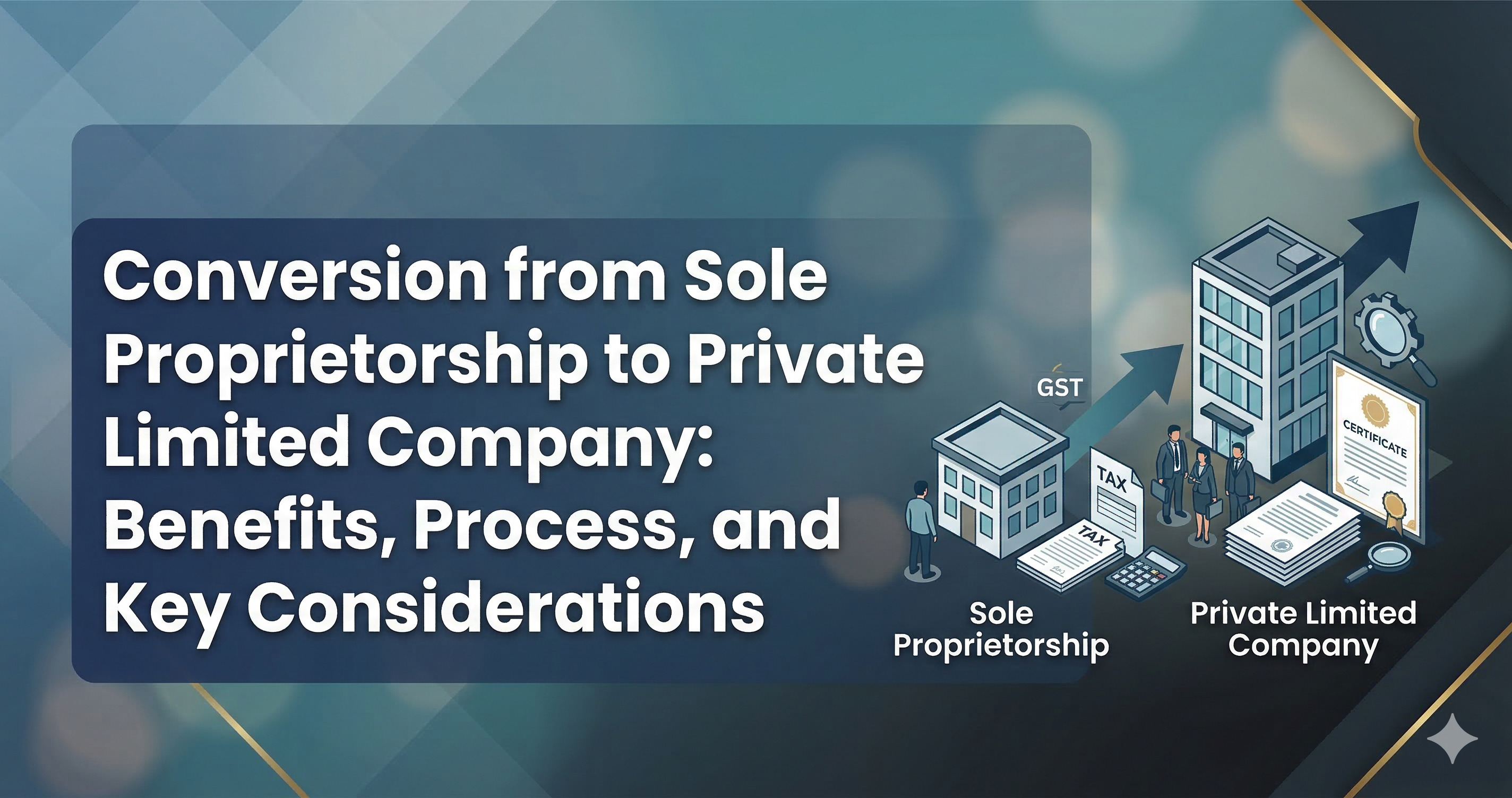
Transitioning from a sole proprietorship to a private limited company is a strategic decision for growing businesses. It enhances credibility, provides legal protection, and opens access to better funding opportunities.
Understanding the Conversion
A sole proprietorship is owned and managed by a single individual, with no legal distinction between the owner and the business. In contrast, a private limited company is a separate legal entity governed under the Companies Act, 2013, offering limited liability and structured governance.
Key Benefits of Conversion
-
Limited Liability Protection
The personal assets of the owner are protected. Liability is restricted to the extent of shareholding.Need help with this? Talk to Chandwani & Company Chartered Accountants in Bhopal → -
Improved Credibility
Private limited companies are perceived as more reliable by banks, investors, and clients. -
Ease of Fund Raising
Equity shares can be issued to raise capital, making it easier to attract investors and venture capital. -
Perpetual Succession
The company continues to exist irrespective of changes in ownership.Need help with this? Talk to Chandwani & Company Chartered Accountants in Bhopal → -
Tax Planning Opportunities
Corporate tax rates may be beneficial compared to individual slab rates, subject to conditions.
Process of Conversion
The conversion is typically done through a slump sale or transfer of business:
-
Incorporation of New Company
Register the company under the Companies Act, 2013.Need help with this? Talk to Chandwani & Company Chartered Accountants in Bhopal → -
Transfer of Business
Transfer assets and liabilities of the proprietorship to the company. -
Execution of Agreement
Draft a business transfer agreement outlining terms and valuation. -
Compliance and Registrations
Update PAN, GST, bank accounts, and other statutory registrations.
Important Tax and Legal Considerations
-
Capital Gains Tax
As per Section 45 of the Income Tax Act, 1961, transfer may attract capital gains unless structured properly. -
Slump Sale Provisions
Section 50B governs taxation of slump sale transactions. -
GST Implications
Transfer of business as a going concern is exempt under Notification No. 12/2017-Central Tax (Rate) dated 28.06.2017.
Pros and Cons
Advantages
-
Limited liability protection
-
Better business image
-
Easier access to funding
Disadvantages
-
Higher compliance and regulatory requirements
-
Increased cost of administration and audits
-
Mandatory disclosures and filings
Conclusion
Converting into a private limited company can significantly benefit growing businesses, but it requires careful tax and legal planning. Evaluating the costs, compliance burden, and long-term goals is essential before making the transition.
For expert guidance on this topic, contact your tax professional today.
Have Questions? We're Here to Help
Get expert advice from Chandwani & Company Chartered Accountants in Bhopal. Reach out to discuss your requirements.