
AY 2026-27 vs Tax Year 2026-27: Why Taxpayers May Need to File Two Returns in the Same Year
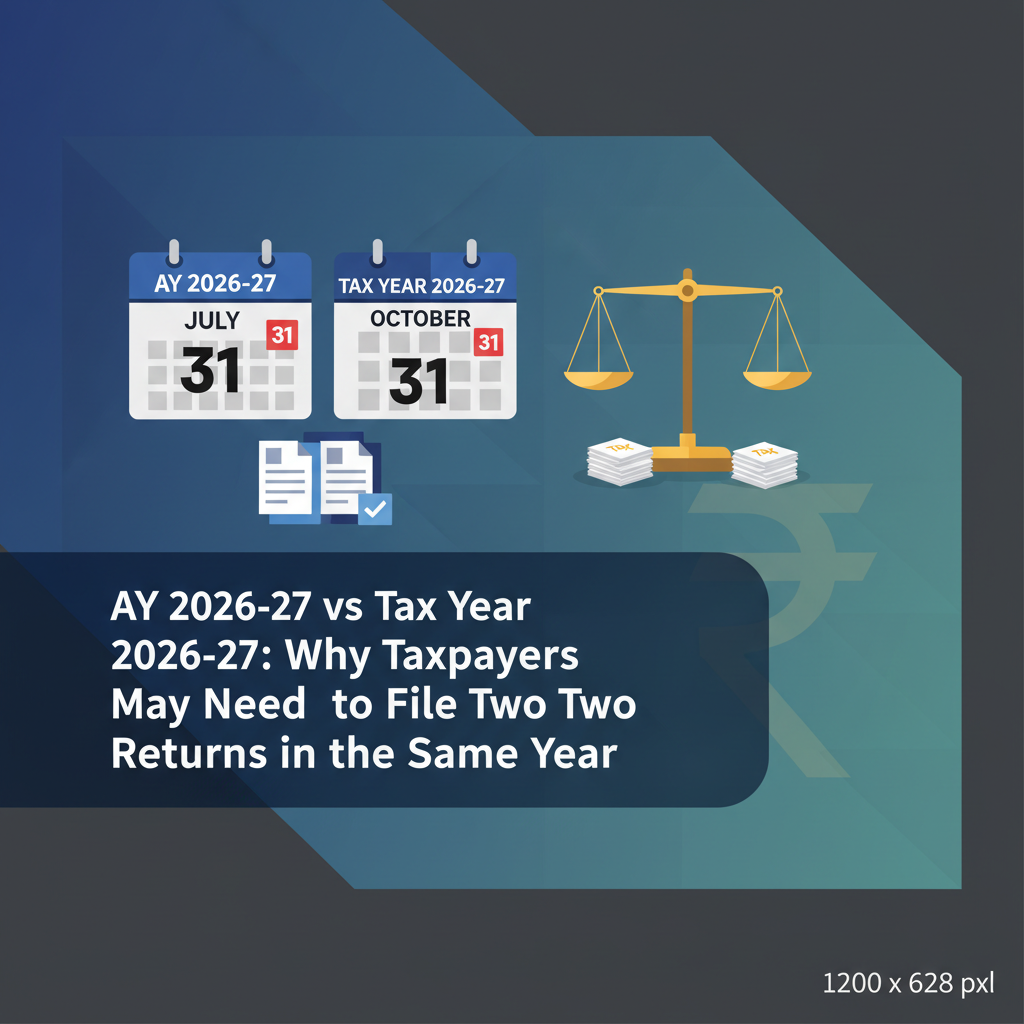
Financial Year 2026-27 marks a historic shift in Indian tax administration — the Income-tax Act, 1961 stands repealed and the Income-tax Act, 2025 comes into force from 1st April 2026. However, this transition creates a unique compliance situation where taxpayers may find themselves filing returns under two different Acts within the same calendar year.
Understanding the Two Parallel Obligations
The confusion arises because tax compliance does not operate strictly within calendar-year boundaries. Two distinct filing obligations will coexist during FY 2026-27:
-
AY 2026-27 (Income of FY 2025-26): This return relates to income earned between 1 April 2025 and 31 March 2026, and must be filed under the Income-tax Act, 1961, using the old ITR forms. The due dates remain 31st July, 31st August, 31st October, or 30th November 2026, depending on the category of taxpayer.
-
Tax Year 2026-27 (Income of FY 2026-27): This is the first return to be filed under the Income-tax Act, 2025. "Tax Year" replaces the earlier concept of "Previous Year" under Section 3 of the new Act, and the corresponding return will only become due in July 2027, with filing requirements governed by Section 263.
Why This Is Not a Duplication
Importantly, taxpayers are not filing two returns for the same income. Each return relates to a distinct twelve-month period of income — one governed by the old Act and one by the new Act. Section 536(2)(c) of the Income-tax Act, 2025 ensures that all proceedings relating to tax years beginning before 1 April 2026 continue to be governed by the 1961 Act, while income earned from 1 April 2026 onwards falls squarely under the new Act framework.
Practical Implications for Taxpayers
- Advance tax instalments for Tax Year 2026-27 will commence from June 2026, even though the AY 2026-27 return is not yet due.
- The e-filing portal is expected to support both AY-based and Tax Year-based filings simultaneously.
- Businesses need not alter their accounting periods, as the Tax Year remains aligned with the financial year (April to March).
Conclusion
Taxpayers and their advisors must maintain clear demarcation between income, TDS, and advance tax payments relating to FY 2025-26 and FY 2026-27 to avoid mismatches in tax credit and filing errors during this transition period.
For expert guidance on this topic, contact your tax professional today.
Have Questions? We're Here to Help
Get expert advice from Chandwani & Company Chartered Accountants in Bhopal. Reach out to discuss your requirements.